Sustainability is becoming more important in building practices. The UAE construction industry is growing quickly. Whether it is housing, commercial buildings, or major infrastructure projects, developers and architects are choosing materials that last and perform reliably over time.
Because of this shift, there is a demand for sustainable construction materials in the UAE. Builders and designers are focused on using materials that are not only strong and efficient but also better for the environment. This change is shaping the future of construction in the region.
This increasing focus has led to an increased demand for sustainable construction materials. The choice of appropriate materials can reduce unnecessary use of resources, the need for maintenance and extend the overall lifespan of buildings.
Two materials of increasing interest in this area are Glass Reinforced Concrete (GRC) and Glass Reinforced Plastic (GRP). Both have practical advantages for different construction applications. German Gulf Fibreglass Industries (GGFI) uses these materials to create customised solutions for the changing needs of the UAE’s construction and industrial sectors.
Let’s take a deeper look at how GRC and GRP help in sustainable construction and why they are sensible choices for materials in modern-day projects.
What Are Sustainable Construction Materials?
Sustainable construction materials are products that are chosen to minimise their environmental impact throughout the product life cycle, including manufacturing, transportation, installation, use and disposal.
It’s not only about picking green products. It’s also about choosing materials that last longer, require less maintenance and make efficient use of the resources available.
Here are some of the key characteristics of sustainable building materials that UAE projects should take into account:
- Durability: Materials that sustain their performance for a long time.
- Material efficiency: Products that reduce waste in construction and unnecessary use of materials.
- Low maintenance: Materials that need less repair and replacement.
- Energy efficiency: Products that can help improve building performance in suitable applications.
- Lifecycle impact: The environmental footprint associated with manufacturing, transportation, installation and disposal.
Selecting the right construction materials is especially important in the UAE where buildings are subject to high temperatures, intense sunlight and harsh environmental conditions.
Why Is Sustainable Construction Important in the UAE?
Sustainable construction is fast becoming a priority across the UAE as the country continues to invest money into modern infrastructure and development that is responsible to the environment.
Initiatives like the UAE Net Zero by 2050 Strategic Initiative encourage industries to adopt more resource-efficient practices and reduce environmental impact.
For developers, architects and contractors, sustainability also means practical decisions for long-term value. Durable materials help reduce the need for frequent replacement, maintenance and unnecessary material waste.
Specialist manufacturers such as German Gulf Fibreglass Industries (GGFI) have an important role to play here, providing GRC and GRP solutions for a variety of architectural, construction and industrial applications.
How Does GRC Support Sustainable Construction?
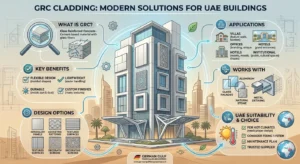
Glass Reinforced Concrete (GRC) or Glass Fibre Reinforced Concrete (GFRC) is a composite material consisting of cement, fine aggregates, water and alkali-resistant glass fibres.
While still providing the performance necessary for specific applications, it can be made into relatively thin and light architectural elements.
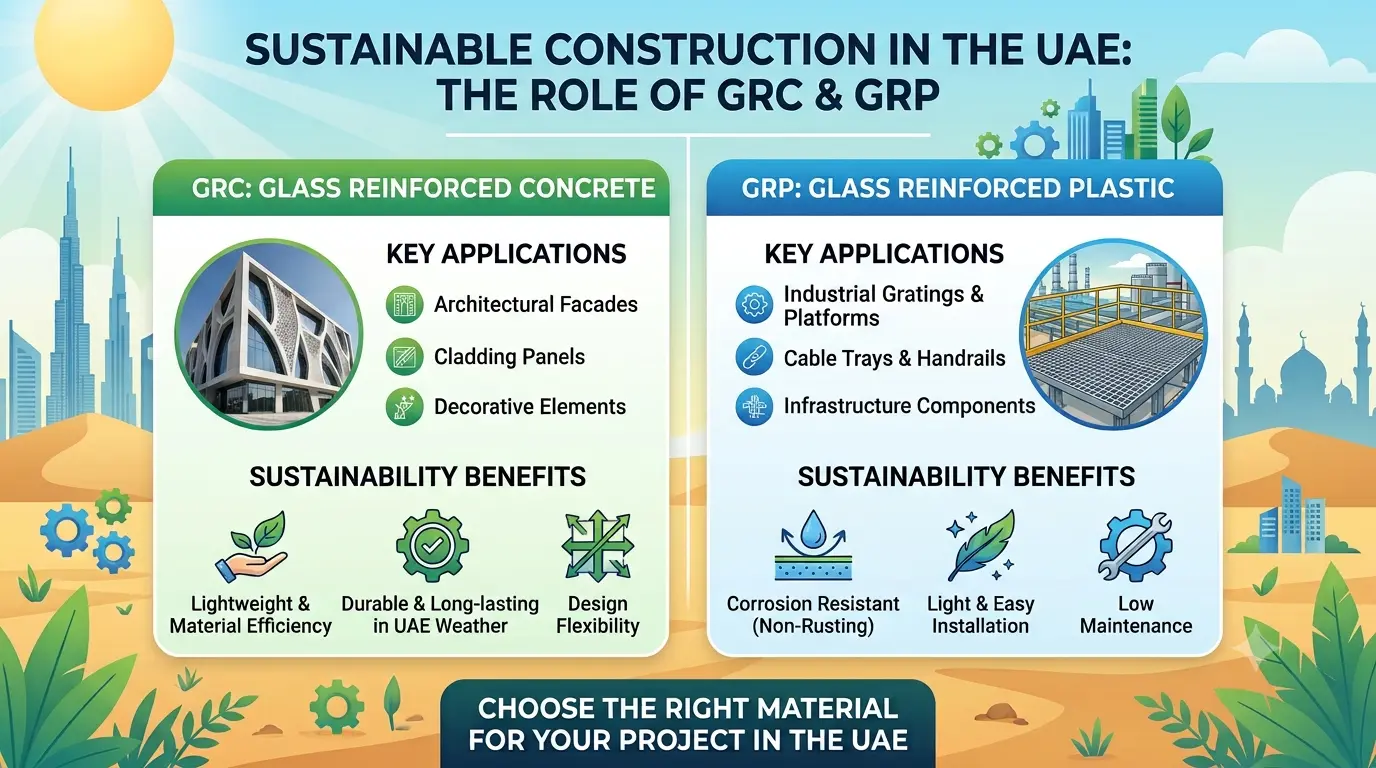
GRC is used widely in today’s construction for facade cladding, decorative panels, architectural features and custom building elements.
This is how GRC can help make buildings sustainable.
1. Lightweight build and material efficiency
One of the main advantages of GRC is that it can satisfy architectural requirements with thinner sections than many conventional concrete products.
This can lead to material savings and in appropriate applications possibly also to a reduction of the structural load of building components.
Depending on product design and project requirements, its light weight can also enable more efficient transportation, handling and installation.
2. Durability and Longevity
GRC is commonly used for architectural facades, decorative panels, cladding and other building components.
Appropriate design, manufacture and installation will provide good durability and resistance to environmental exposure.
In the UAE, buildings are exposed to harsh sunlight and weather conditions, and it is important to select materials that will continue to perform over time.
Durable components can help reduce the need for frequent replacement, helping to minimise material waste over the lifecycle of a building.
3. Flexibility in Design
Sustainable construction does not need to constrain the creativity of architecture.
GRC can be shaped into a variety of patterns, textures and finishes. This makes it perfect for decorative facades, columns, screens, architectural features and custom external elements.
At GGFI, our GRC solutions are ideal for projects that need a balance of architectural flexibility, practical performance and custom design capabilities.
How Can GRP Help Sustainable Building?
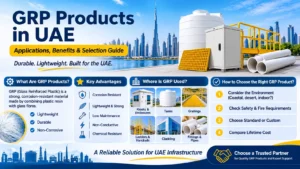
GRP construction materials are commonly used in places where lightweight, resistance to corrosion and durability are significant.
Whether it’s industrial infrastructure or commercial buildings, GRP offers practical advantages that can help you choose better materials.
1. Good corrosion resistance
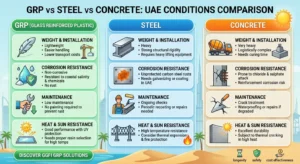
GRP does not rust like regular steel. It is corrosion-resistant in a wide variety of environments and therefore suitable for use in applications where moisture, chemicals and difficult operating conditions are encountered.
This can reduce corrosion repairs, the need for protective coatings and premature replacement.
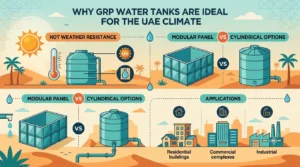
GRP is a good material of choice for projects in the UAE where some components of infrastructure may experience challenging environmental conditions.
2. Simple to install and lightweight
GRP products are often lighter than many other traditional metal alternatives.
This facilitates transportation, handling and erection. It can also, depending on the application, reduce the need for heavy-lifting equipment and associated installation resources.
These characteristics render GRP construction materials particularly appropriate for constructions in which the ease of installing and manipulating the materials is a significant factor.
3. Long life and low maintenance
GRP is used extensively in applications such as gratings, cable trays, handrails, access platforms, pipes and structural components.
The product can have a longer service life due to its durability and resistance to some environmental conditions.
German Gulf Fibreglass Industries (GGFI) provides GRP solutions for a wide range of construction and industrial applications, assisting project teams to find the right products for their needs.
GRC vs GRP: Choosing the Right Material for Sustainable Construction
Both GRC and GRP have advantages for sustainable construction but differ in their applications and performance characteristics. The right choice will depend on the project’s specific needs.
GRC is perfectly suited for:
Architectural facade panels and cladding.
• Decorative concrete elements and custom designs.
• Light architectural elements.
• Projects requiring design flexibility and concrete-based performance.
GRP is perfect for:
• Gratings and platforms for industrial access.
• Cable trays and handrails.
• Piping & infrastructure components
• Applications requiring low weight and corrosion resistance.
While GRC delivers through architectural flexibility and material efficiency, GRP offers benefits from corrosion resistance, durability and lower maintenance requirements.
GGFI offers two types of materials to meet different construction and industrial needs. This helps customers find the right solution according to their project requirements.
What Factors Should You Consider When Choosing Sustainable Building Materials in the UAE?
However, you must take into account more than just costs and product specifications when choosing sustainable materials. Developers and contractors should consider how a material will perform throughout its expected service life.
Several important points should be considered:
• Environmental factors: Think about heat, UV exposure, humidity, moisture and chemical exposure.
• Product life expectancy: Consider the life span and maintenance requirements of the product.
• Material efficiency: Analyse the amount of material needed to achieve the desired outcome.
• Environmental documentation: Ask for any certifications, life cycle assessment data and Environmental Product Declarations (EPDs) that may be relevant.
• Manufacturer expertise: Work with experienced manufacturers who can offer technical specifications and application-specific advice.
GGFI’s approach to choosing the right GRC or GRP solution is based on understanding the unique needs of each project. This ensures that the material chosen is suitable for the intended purpose and meets the performance expectations.
GGFI: Working Toward a More Sustainable Future
German Gulf Fibreglass Industries (GGFI) provides specialised GRC and GRP solutions for construction and industrial sectors for a wide range of project applications.
By choosing the right materials, for the right applications, developers, architects and contractors can create infrastructure that is efficient in the long run.
Looking for the best GRC and GRP for your next project in the UAE?
Browse GGFI’s GRC Products and GRP Products to find the right fit for your project.
FAQ (Frequently Asked Questions)
1. What are sustainable building materials?
Sustainable building materials are the ones that are chosen to reduce harm to the environment by using resources in a way being strong needing less care and being handled in a responsible way throughout their life.
2. Is GRC a friendly building material?
GRC is weight uses material efficiently and is strong which can support sustainable building. But the overall effect on the environment of cement depends on how much’s used how it is created how it is moved and how it works during its life.
3. How can GRP help in construction?
GRP is used in building because it does not get damaged by water is lightweight and lasts a long time. These qualities can reduce the need, for care. The number of times the product needs to be changed.
4. What to look for in materials?
Important factors are durability, material efficiency, environmental impact, maintenance needs, installation needs, lifecycle performance and verified environmental product data.
5. Where to buy GRC and GRP products in the UAE?
German Gulf Fibreglass Industries (GGFI) offers GRC and GRP solutions for different construction and industrial applications. You can explore our company’s product range on its official website.