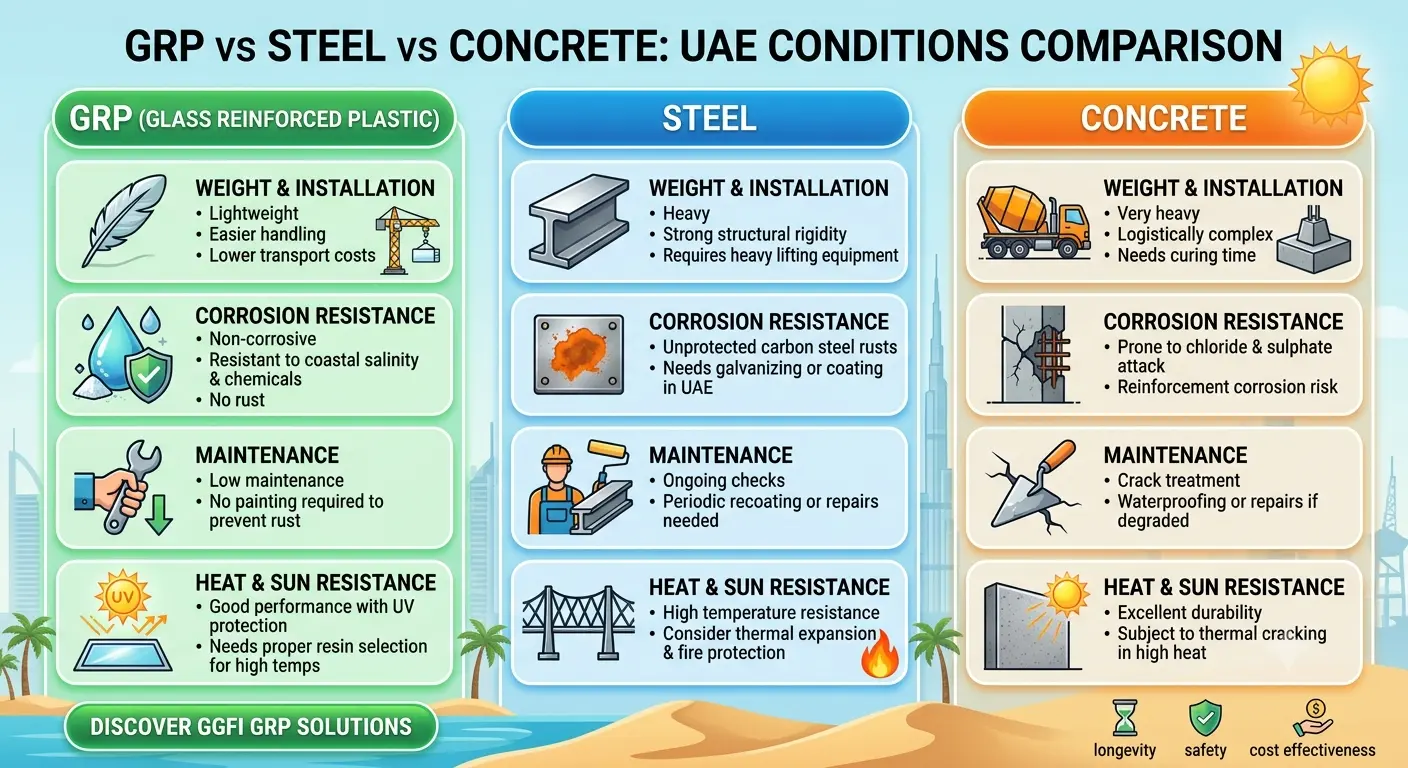
Selecting the right building material is important for longevity, safety and cost effectiveness. In the UAE, materials’ performance over time can be influenced by high temperatures, humidity, coastal salinity and chemical exposure.
GRP vs steel vs concrete: When comparing GRP vs steel vs concrete, each material has its own advantages. Steel provides strength, concrete provides structure and Glass Reinforced Plastic (GRP), or fibreglass, provides lightweight construction and resistance to corrosion.
But what material is ideal for UAE conditions? The answer relies upon the application, the environmental exposure, installation requirements and life cycle costs. Read below to know more.
Understanding GRP, Steel and Concrete
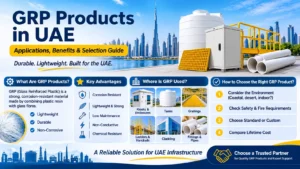
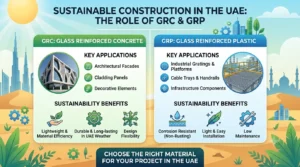
GRP (Glass Reinforced Plastic) is a composite material made from glass fibres and polymer resin. It has a good strength-to-weight ratio, is corrosion resistant and is appropriate for industrial parts, ladders, gratings, tanks and enclosures. These are some of the key GRP advantages for industrial and construction projects.
Steel is used extensively in building, as it is robust, rigid and versatile. Carbon steel can rust if exposed to moisture and salts and not well protected.
Foundations, buildings, retaining walls and big water storage facilities are typically made of concrete. It is good under compression pressures but exposure to chlorides, sulphates and moisture might compromise its durability if not properly built and maintained.
1. Weight & Installation
One of the biggest GRP advantages is its lightweight structure. GRP components are generally easier to transport and handle than steel and concrete, which can save installation work and the need for large lifting equipment.
Steel has strong structural strength and rigidity, but may need more significant handling measures. Concrete is sometimes significantly heavier and requires more logistics, more formwork and more time to cure.
GRP can be a valid choice for enclosures, access systems and other non-primary structural elements on projects in the UAE where access for installation is limited or timetables are tight.
2. Corrosion Resistance in UAE Conditions
Coastal humidity and salt exposure are major issues for infrastructure and industrial facilities’ corrosion resistance.
GRP does not rust unlike ordinary carbon steel. Proper resin system selection can offer great protection from moisture, salt conditions and a lot of chemicals.
Specifying the correct grade also allows galvanising or protective coating of the steel, which can help extend the service life. Concrete properly made is durable, however chloride penetration and reinforcing corrosion can be a problem under severe conditions.
GRP should be chosen for exterior enclosures, water-treatment facilities, industrial installations and coastal infrastructure for projects that require corrosion resistant materials UAE.
The chemical resistance, UV stability and temperature limitations of GRP should be checked against the anticipated operating conditions nevertheless.
3. Maintenance and Ongoing Costs
The initial purchase price may not always indicate the overall cost of a material during its service life.
Generally, GRP needs less care against corrosion than unprotected carbon steel. It is not subject to frequent painting to prevent rust, but it still requires periodic inspection to detect physical damage, ageing or joint degeneration.
Depending on grade and climate, steel may need coating repairs, corrosion inspections or recoating. If degradation develops, concrete structures may require crack treatment, waterproofing or repairs.
GRP has long-term value since the initial investment may be offset by decreased maintenance and simpler handling. The most economical choice will depend on the installation expenses for the project, expected service life and maintenance requirements.
4. Heat and Sun Resistance
High temperature resistance and exposure to UV radiation are required for materials to be used outside in the UAE climate.
GRP can perform well when produced with a proper resin system and UV protection. Some formulations, nevertheless, are affected by prolonged sunshine and high temperatures, and it is therefore necessary to consult product-specific performance data.
Steel is a trusted construction material in many applications, but you have to consider corrosion, thermal expansion and fire exposure. Concrete, when properly designed and constructed, can give outstanding durability. Cracking and moisture-related deterioration can occur.
Before making a final decision, review the operating temperatures, exposure conditions, fire requirements and applicable standards for each of the three materials.
5. The Comparison of GRP, Concrete, Fibreglass and Steel
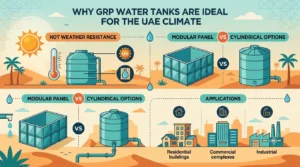
The issue of GRP vs concrete is of particular significance with relation to water infrastructure and industrial facilities. Concrete is frequently used for foundations, big reservoirs and underground constructions, whereas GRP is suitable for tanks, gratings, coverings and protective lining systems.
In certain situations, the two materials function in concert. For example, a well formulated GRP lining can safeguard the inside surface of a concrete tank, provided that the substrate, chemical compatibility and installation requirements are dealt with.
Fiberglass vs steel is also a relevant comparison when considering electrical and telecoms enclosures. GRP offers corrosion resistance and electrical insulation, whereas steel offers rigidity and mechanical strength.
In addition to the final selection, ingress protection ratings, impact resistance, fire performance, UV exposure and the equipment being housed need to be considered.
GGFI’s GRP enclosures provide solutions for essential industrial and infrastructure applications. Explore GGFI’s GRP enclosures to learn more.
6. Choosing the Right Material
Things to consider before choosing a material:
- Application: Determine the structural loads, equipment requirements and the purpose.
- Environment: Assess heat, humidity, UV exposure, salinity and chemical exposure.
- Installation: Take into account transport, access to site, lifting and installation time.
- Maintenance: Compare schedules for inspection, repairs and anticipated replacements.
- Compliance: Check environmental, fire, electrical and structural regulations.
- Lifecycle cost: Include initial outlay, installation and long-term upkeep.
German Gulf Fibreglass Industries (GGFI) provides GRP solutions for a wide range of industrial and construction applications. Discover GGFI’s GRP products UAE today.
Frequently Asked Questions
1. GRP vs Steel – What’s the Difference?
GRP is a glass-fibre-reinforced polymer composite, whereas steel is a metal alloy. GRP is often lighter and corrosion resistant, while steel is stiffer and extensively used for load-bearing buildings.
2. Is GRP More Corrosion-Resistant Than Steel?
GRP will not rust like carbon steel and is resistant to moisture, salts and many chemicals. Steel performance depends on grade and protective treatment. GRP resistance depends on the resin system and exposure conditions.
3. Is GRP Lighter Compared to Concrete?
Yes. GRP is often significantly lighter than concrete; hence, it is often easier to transport and install multiple GRP components.
4. When Should GRP be considered?
GRP is a good choice for enclosures, tanks, gratings, ladders and lining systems where lightweight construction, corrosion resistance or electrical insulation are advantages.
Summary
GRP is a suitable material for a project depending on its requirements when compared to steel or concrete. GRP provides advantages in terms of lightweight construction and corrosion resistance, steel is employed in many demanding structural applications, and concrete is indispensable for foundations and large structures.
In the case of UAE projects, a proper decision has to take into account environmental exposure, maintenance requirements and lifecycle costs. For applications that require corrosion resistant materials UAE conditions demand, GRP can be worth considering alongside steel and concrete.
Searching for GRP products UAE? Check out GGFI’s GRP products to find potential solutions for your industrial or construction demands.