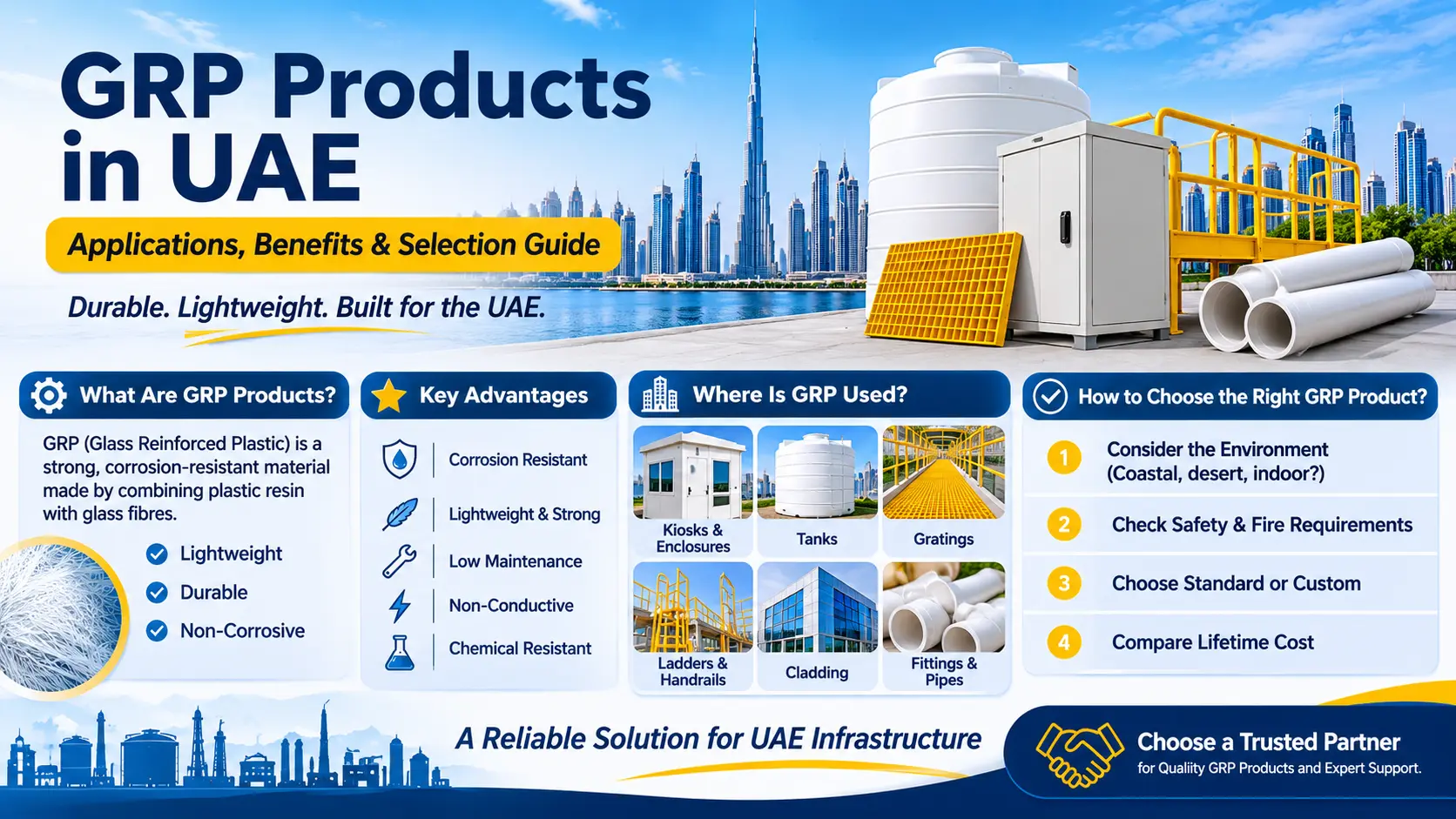
The UAE has a strong grip on building materials. Summer temps soar above 45°C, coastal humidity is high, salt hangs in the air, and sand gets everywhere. Steel rusts, concrete cracks and timber wears out soon. That’s why GRP products UAE are now specified by engineers, contractors and facility managers for everything from small electrical enclosures to large water tanks. The demand for reliable fiberglass products UAE continues to grow as infrastructure projects require durable materials suited to challenging environmental conditions.
This guide covers the main product types, why GRP is a good fit for local conditions and a simple way to select the right one.
What Are GRP Products Used For?
GRP (glass reinforced plastic) is the process of reinforcing a plastic resin with glass fibres. The result is light, strong, and resistant to corrosion. You may also hear it referred to as fibreglass, and the fibreglass products that UAE buyers are searching for are essentially the same material. It is used for the following purpose:
Kiosks and Enclosures: Housing for electrical panels, meters, telecom equipment and control systems. They keep the equipment safe from heat, dust and moisture and they do not conduct electricity.
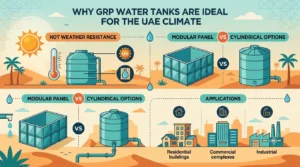
Tanks: Storage of drinking water, fire-fighting water, chemicals, and wastewater. They don’t rust or leach and can be built in large sizes.
Lining: A protective layer in concrete or steel structures such as sewage tanks, channels and treatment units. It stops chemical attack and prolongs the service life of the underlying structure.
Gratings: walkways, platforms, trench covers, drain covers. They are anti-slip, lightweight and safe in wet areas.
Ladders and handrails: Safe access at plants, towers, and waterfront sites where metal would corrode and where non-conductive materials are required.
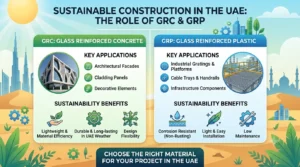
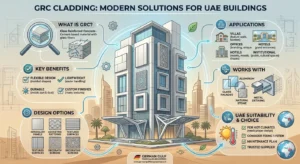
Cladding: Panels for building exteriors and industrial buildings. They are resistant to UV, weather and salt spray.
Fittings and pipes: Flanges, connectors and pipes for water and chemical lines.
GRP is also used in manhole covers, cable trays, odour control units and custom-moulded parts beyond these. These are among the widely used GRP infrastructure products across industrial and commercial projects.
What Are the Advantages of GRP?
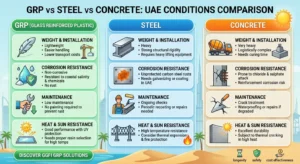
It does not corrode. This is especially important on the coast, where salt air will eat away ordinary steel in a few years.
It’s light but strong. Parts are easier to move, lift and install, reducing labour and crane costs.
It requires very little upkeep. No painting or re-coating and little repair. That savings compounds over a 20 to 30 year lifetime.
It is safe with electric. GRP is non-conductive and therefore ideal for use in substations, switchgear housings and ladders close to live equipment.
It is chemical resistant. It can handle acids, alkalis and wastewater gases with the right resin system.
These advantages make GRP a preferred choice for several GRP applications UAE projects require, particularly in environments exposed to heat, moisture and chemicals.
Where Is GRP Used in Infrastructure?
You’ll find the most common GRP infrastructure products in almost every sector that you’d see in UAE projects.
- Water and wastewater storage tanks, treatment plant lining, covers and walkways, odour control.
- Power and utilities: substation kiosks, cable trench covers, non conductive access systems.
- Oil, gas & petrochemical: chemical storage, piping & corrosion-resistant grating.
- Transport and telecom: metro or rail utility housings, roadside cabinets, equipment shelters.
- Marine & coastal: Jetty walkways, handrails & waterfront cladding.
- Buildings and industrial plants: Façade cladding, roof access and plant room platforms.
GRP infrastructure products tend to outlast the alternatives in the harsh conditions where down-time is costly.
How Do I Choose the Right GRP Product?
You don’t need to be a materials expert. Begin with what the product is supposed to do. Pair it with the correct type.
Kiosks and enclosures are the way to go if you’re looking to protect electrical or telecom equipment, but do check the size, ventilation and ingress protection rating. For storing water or chemicals, choose a tank and look at its capacity, resin grade and chemical compatibility.
If you want to protect concrete or steel against corrosion, lining is the answer. Consider the chemical exposure, thickness and surface preparation. For a safe walking surface or drain cover, use gratings and check the load rating, anti-slip finish and panel size.
Select ladders and handrails that meet the relevant safety standards for access at height or near water. Cladding is the pick for building exteriors, so check UV resistance, fire rating and colour. Pipe and chemical connections are made with fittings. Be sure the pressure rating is appropriate for the line.
Once you know the type of product, four questions will quickly narrow down the choice:
What is the environment?
Coastal, desert, indoors or underground? Resins must be specific grades for salt and chemicals.
Are there any safety or fire requirements?
Ask to see test reports and certifications before placing an order.
Custom or standard?
The standard sizes are quicker and cheaper. Custom design is often justified by unusual layouts.
How much does lifetime cost?
The cheapest quote is not always the best quote once you factor in maintenance and replacement.
Conclusion
If you’re looking for one of the most reliable GRP supplier UAE businesses, German Gulf Fibreglass Industries (GGFI) is the right choice. Selecting the right partner is as important as selecting the right product. A reliable GRP manufacturer UAE clients use will offer in-house design, quality testing and a portfolio of similar projects you can rely on. Equally important when deadlines are tight is a responsive GRP supplier UAE teams can count on for delivery and after-sales support.
FAQs
1. What are GRP products used for?
GRP products are used to build kiosks, enclosures, tanks, lining, gratings, ladders, cladding, fittings and many other items for utilities, industry and construction. They are chosen where corrosion, moisture, chemicals or electrical safety is a worry.
2. What are the benefits of GRP?
GRP is non-corrosive, light and strong, requires little maintenance, is non-electrical, chemical resistant and can be moulded into any custom shape. Together they provide a long life and reduced running costs.
3. Where is GRP used in infrastructure?
It is used in water and wastewater plants, power and utility networks, oil & gas facilities, telecom and transport systems, marine sites and commercial or industrial buildings.
4. How do I select the right GRP product?
Start with the job the product has to do, then consider the environment, load, fire and safety requirements, and whether you need standard or custom sizes. Don’t just compare price, compare lifetime cost and choose a maker with a proven track record on projects.
Final Reflections
GRP is practical answer to UAE heat, humidity and salt. It lasts longer, weighs less, costs less to maintain and that is why it has become part of everyday infrastructure.
Searching for your perfect match? Browse our complete selection of GRP Products and visit each product page for kiosks, tanks, enclosures, lining, gratings, ladders, cladding and fittings. Or, contact our team with your requirements and we will help you choose.